Why the 210 corridor scales ice makers fastest
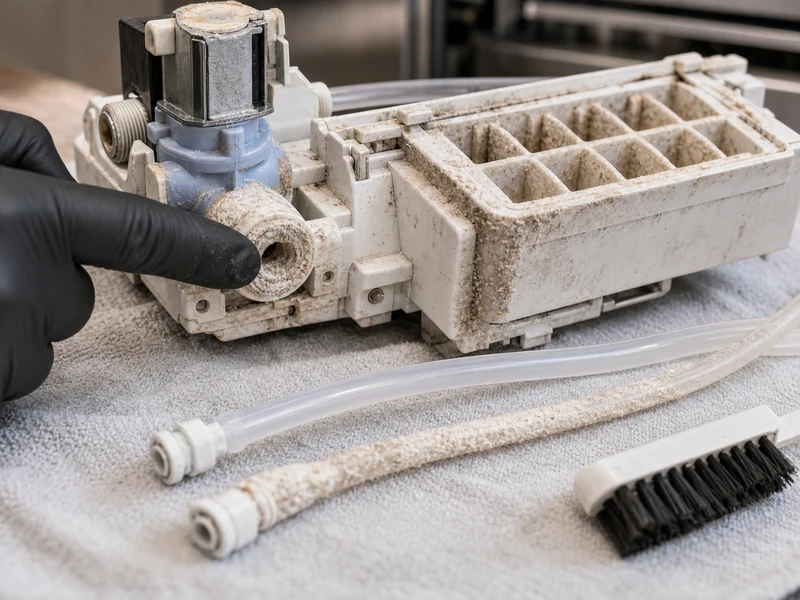
The limestone Floridan aquifer is the source of the county’s hardness, and the dissolution runs heaviest in this northwest band, pushing readings toward the top of the 14-to-28-grain range. An ice maker forces household water through tight passages on every harvest, so it feels that mineral load before any other appliance — the fill tube narrows, the inlet valve stiffens, and cubes shrink and go hollow. Out here that decline simply arrives faster.
Usually it is not a broken machine. We descale the water path, replace the valve when flow stays low, and set a maintenance interval matched to your street’s measured hardness — the same logic laid out on the hard-water ice maker diagnostic and the hard water guide, which names this corridor as the metro’s worst.